The People Problem Inside Your AI Strategy

Jay Nathan
Most AI conversations for Digital Experience leaders quickly default to tools, e.g. which platform, which model, which integration. Tools are concrete, which makes them easy to argue about. But the teams making the most progress on AI adoption aren't outpacing their peers on tooling. They're outpacing them on people.
Welcome to Beyond The Click by Balboa. We're continuing our series on how to lead Digital Experience in an AI-first, resource-constrained world. So far we've covered tools and processes a lot, so in today's issue we're focused on people, including:
- The role is changing, the job description isn't 📋
- Headcount math is changing, too ➗
- The culture work is on the leaders 💪
Let's dive in.
The role is changing, the job description isn't 📋
The customer success function is shifting in a way that's worth naming. The old model rewarded product expertise and responsive service. The new model rewards something closer to enterprise consulting: deep fluency in the customer's world, their strategic pressures, and how your product drives their business outcomes.
The reason for this shift is that product knowledge is no longer a genuine differentiator for a CSM. Knowing the platform deeply, answering feature questions quickly, and guiding users through workflows all used to be real skills that customers valued. Today, AI is absorbing all of that. It will answer feature questions, surface documentation, and deflect repetitive requests faster and at greater scale than any human team. That removes the foundation the old model was built on.
But what AI will not do is understand why a particular enterprise customer is anxious about renewal, or how to reframe a conversation around business outcomes rather than seat counts (or, increasingly today, credit limits). That gap belongs to your humans, and it requires deliberate investment to fill:
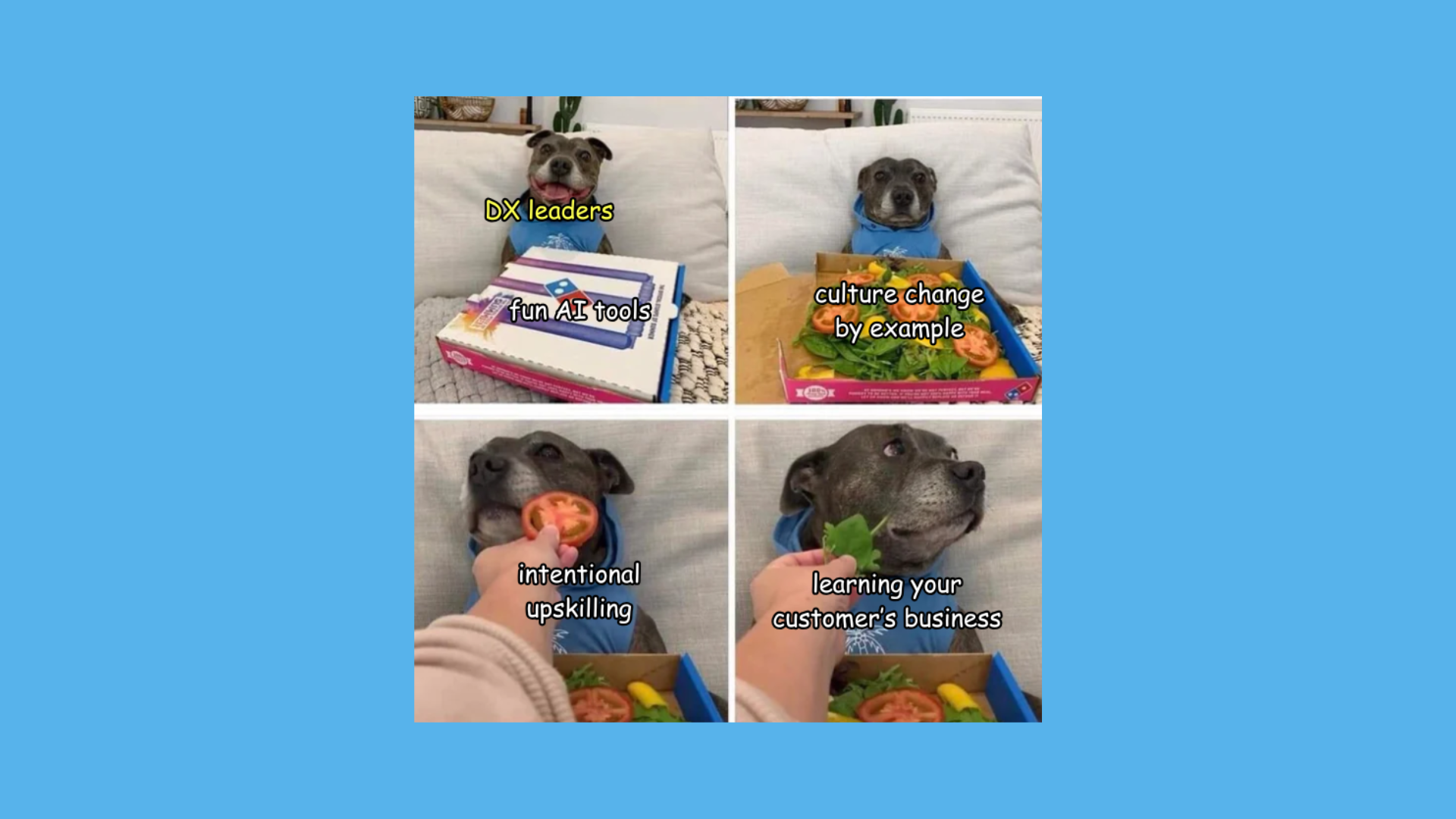
- Ongoing enablement focused on industry fluency and strategic conversation skills, not just product knowledge
- Letting early adopters teach peers rather than relying on top-down training mandates
- Creating protected time for learning, not just declaring it a "priority" in a team meeting
Headcount math is changing, too ➗
These skill investments connect directly to a harder conversation most digital experience leaders are already having: "Does every open headcount request still make sense?"
The old model had a built-in answer: as your customer base grows, so does your team. Headcount scaled with book of business. But that model assumed CSMs would continue doing a mix of high-value and low-value work, because there was no other way to get the low-value work done. Automated onboarding, AI-assisted support deflection, and continuous risk monitoring are steadily absorbing that lower tier. The signal detection and health monitoring work that once consumed significant CSM capacity can now run in the background, with tools like Pendo Predict surfacing risk directly into existing workflows rather than requiring a manual effort to find it.
The result is that the more useful frame for any new hire decision is: "Could we instead use AI to extend the capacity of someone we already have?" The goal is not fewer people doing the same work. It is redirecting human effort toward what actually requires humans: large enterprise relationships, complex renewals, and moments where judgment and trust are what the customer needs most.
The Culture Work Is On The Leaders 💪
Neither of the above shifts happen because you announced them. What actually moves teams forward comes from deep within your organizational culture:
-
Bring experimenters into the spotlight. Have them present to senior leadership and cross-functional partners, not just their immediate team.
-
Connect AI adoption to career growth. Teams that see this as a skill investment behave very differently than teams that see it as a cost-cutting signal.
-
Get hands-on yourself. You cannot credibly lead this transition from a distance. Direct experience with these tools also develops the judgment needed to guide your team through it.
The through-line is straightforward: AI is already shifting the work. But humans, starting with the ones leading the team, determine whether that shift succeeds.
Did a friend forward you this article? Subscribe to Beyond The Click and get the latest on Pendo and Digital Experience straight to your inbox every other Thursday.⚡